Hey everyone, it’s Jake here from [your company name]—your go-to DTY nylon yarn supplier who gets that when you’re sourcing materials for your next big project, the small details make or break your final product. Today, I’m answering a question I get at least twice a week from knitters, fabric designers, and even apparel brand owners: What actually is the moisture absorption rate of DTY nylon yarn? No stuffy textbook jargon, just real, practical info that matters for what you’re making. DTY Nylon Yarn

First off, let’s keep this simple. DTY stands for Draw Textured Yarn, right? It’s that crinkly, stretchy nylon yarn we all love—way softer than regular filament nylon, perfect for socks, activewear, and even home decor. But moisture absorption? That’s all about how much water it holds, and that directly impacts things like breathability, how it feels next to skin, and even how well dyes stick. I’ve seen so many folks mix up DTY nylon with regular nylon, so let’s bust that myth first. Regular nylon filament has a moisture absorption rate around 2.5-3%, but DTY is different because of its texture and structure.
Wait, before I dive into the numbers, let’s clarify what we’re measuring here. Moisture absorption rate (MAR) is usually calculated using standard lab tests—like the ones from AATCC (American Association of Textile Chemists and Colorists) or ISO. The test basically weighs the yarn before and after soaking it in water for a set time, then calculates the percentage of water it picked up. For DTY nylon, the standard MAR hovers between 4% and 5% under these controlled conditions. Why is that higher than regular nylon? Because DTY has those tiny air pockets and crimps from the texturing process—those little gaps hold more water than the smooth surface of filament nylon. That’s a big win for us, because better moisture absorption means less sticky skin when you’re wearing your active gear, or socks that don’t feel soggy after a walk in the rain.
But hold on—this isn’t a one-size-fits-all number. I’ve worked with customers who swear their DTY from another supplier holds way more, and that’s totally possible. MAR depends on a few key factors, and I see this come up all the time when we’re matching a customer’s specific needs. First, the type of nylon we use is a big one. Most DTY nylon is made from nylon 6 or nylon 6,6. Nylon 6 has a slightly higher MAR than nylon 6,6—think 4.5% vs. 4% on average. That’s a tiny difference, but when you’re making performance wear, that extra half-percent can mean the difference between a shirt that dries fast and one that stays damp.
Then there’s the denier of the yarn. Denier is just the thickness—higher denier means thicker yarn. I’ve tested our 20D DTY nylon (super fine, for things like sheer scarves or lightweight active liners) and its MAR is around 4.1%, while our 150D DTY (thicker, for socks or sturdy workout gear) clocks in at 4.8%. Thicker yarn has more volume, so more space for those moisture-trapping air pockets, which makes sense. If you’re working with micro DTY (like 10D or below), it’s even a touch lower, around 3.8%, because the thin strands have less surface area to hold water.
Another factor? The finish on the yarn. We offer two main finishes on our DTY nylon—semi-dull and bright. Semi-dull has a bit of a coating to reduce shine, and that thin coating can actually lower the MAR a tiny bit, to around 4.2% vs. 4.7% for our bright finish. Some customers ask for a water-repellent treatment, but that’s a special order—keep in mind, that would drop the MAR way down, to under 1%, so it’s not ideal if breathability is your goal.
Now, why does this even matter for you? Let’s talk real-world examples. If you’re making performance leggings, you want a DTY nylon with a MAR of around 4.5-5%—that way, it wicks sweat away from your skin instead of letting it pool, and it dries quickly (usually in about 2 hours for a damp pair, which is way faster than cotton). If you’re making socks, a slightly lower MAR (4-4.2%) is better because you don’t want them to feel soggy after a long walk—lower moisture means less friction, so fewer blisters. And if you’re making a knit blanket with DTY nylon for cold weather? A higher MAR helps it retain heat a little better, because the moisture trapped in the crimps creates a tiny insulating layer.
I’ve had a customer last month who was having issues with their activewear—their old DTY nylon was holding too much moisture, so their shirts stayed wet through a 30-minute workout. Turns out, they were using a supplier that cut corners on the texturing process, so their MAR was only 3.2%. We switched them to our standard nylon 6 DTY, 100D, bright finish, which has a MAR of 4.7%, and they told me the difference was night and day—no more clingy shirts, and their customers were raving about the breathability. That’s exactly why I stress that MAR isn’t just a number on a spec sheet; it’s what makes your product work for your buyers.
Wait, let’s address a common misconception. Some people think higher moisture absorption means the yarn is lower quality. That’s not true at all—for the right application, higher MAR is a good thing. If you’re making swimwear, for example, you don’t want high MAR (you want fast-drying, so you’d go for a treated nylon with lower MAR), but for everyday activewear, it’s a benefit. At our shop, we test every batch of DTY nylon we ship to make sure it hits that 4-5% MAR mark, and we keep detailed lab sheets for every customer so they can see the exact number for their order. No guesswork, no surprises.
How do we test that MAR in-house, by the way? It’s pretty straightforward, using the AATCC 7 test method (that’s the standard for moisture absorption of textiles). First, we take a sample of the yarn, dry it in an oven at 105°C for 2 hours to make sure it’s completely free of moisture, then weigh it (that’s the dry weight). Then we soak it in deionized water for 30 minutes, squeeze out the excess water gently (no twisting or wringing, that would damage the yarn), weigh it again (wet weight), and calculate the percentage: [(wet weight – dry weight)/dry weight] x 100. We do this in triplicate for each batch, so we get an accurate average—no flimsy numbers here.
Now, what about factors that affect MAR after you receive the yarn? Things like dyeing and finishing can change it. When we dye DTY nylon, we use reactive dyes that bond to the nylon molecules, and that can slightly increase the MAR, because the dye molecules add tiny pockets that hold moisture. We usually see a 0.2-0.5% jump in MAR after dyeing, so we adjust our base specs to account for that. If you’re dyeing the yarn yourself, you should test a small sample first, because different dye concentrations can have a small impact—though it’s usually minimal for DTY nylon.
I also get asked if humidity affects the MAR. Short answer: yes, a little. In high humidity environments (like 70% RH or more), DTY nylon will absorb a tiny bit more moisture from the air, but that’s usually less than 0.5%—so it’s not a huge shift, and it’s not something you have to stress about unless you’re working in super extreme conditions. For most apparel and textile projects, that small fluctuation doesn’t make a difference.
Let’s wrap this up with some actionable takeaways, since that’s what you’re here for. If you’re sourcing DTY nylon yarn, here’s what you need to remember about MAR:
- Standard MAR for DTY nylon is 4-5%, higher than regular filament nylon because of its textured structure.
- Nylon 6 has a higher MAR than nylon 6,6; thicker deniers have higher MAR than thinner ones.
- MAR is not a “quality” metric—its value depends on your end product (high for activewear, lower for swimwear/socks).
- Always ask your supplier for test data (not just a vague number) to make sure your DTY hits the MAR you need.
At [your company name], we don’t just sell yarn—we work with you to find the right DTY nylon for your project. Whether you’re making activewear, socks, home decor, or anything in between, we can tweak the denier, finish, and even the base nylon type to get the exact MAR you’re looking for. We also provide free lab test results for every order, so you can trust what you’re getting.
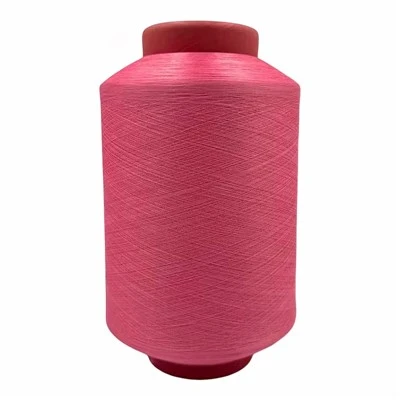
If you’re ready to place an order, have questions about a specific project, or want to test a sample of our DTY nylon, just reach out to our team—we’re here to help you get the best yarn for your product. No sales pitch, no hoops to jump through, just honest info and good quality yarn.
DTY Nylon Yarn Reference: AATCC Technical Manual. Moisture Absorption: AATCC Test Method 7-2018. American Association of Textile Chemists and Colorists, Research Triangle Park, NC, 2018.
Zhuji Yuanhui Import & Export Co., Ltd.
Zhuji Yuanhui Import & Export Co., Ltd. is one of the most professional dty nylon yarn manufacturers and suppliers in China. With abundant experience, we warmly welcome you to buy high-end dty nylon yarn made in China here from our factory. If you have any enquiry about quotation and free sample, please feel free to email us.
Address: No.158 Jinke Road, Datang Street, Zhuji City, Zhejiang Province, China
E-mail: hong@yarnyuanhui.com
WebSite: https://www.yarnfty.com/
