Hey everyone, it’s Jake from the layflat hose supply team, and today I’m answering one of the most common questions I get from new clients: “Are layflat hoses made in compliance with safety standards?” Let’s cut through the jargon, skip the corporate fluff, and talk straight—because this isn’t just a box to tick for us; it’s the whole reason we do this. I’ve been selling layflat hoses for 8 years now, and I can tell you firsthand that there’s a huge gap between a cheap no-name hose from some random overseas seller and one that actually checks all the safety boxes. Let me break this down like I would with a farmer, construction foreman, or event coordinator who’s just dropped $500 on hoses and is nervous they’ll blow out mid-job. Layflat Hose
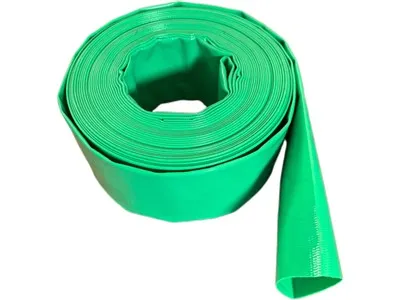
First off, let’s get one thing straight: safety standards for layflat hoses aren’t made up by some stuffy boardroom. They’re built to solve real problems. I’ve seen what happens when a non-compliant hose fails—water spraying a construction crew when they’re 30 feet up a lift, or a fire department line bursting because it was rated for half the pressure it’s actually running at. No one wants that, right? So what standards are we even talking about here? Most of the ones that matter for the industries we work with are ISO, NFPA, and sometimes OSHA, depending on where you are and what you’re using the hose for. For example, if you’re using these for agricultural irrigation, ISO 9001 and ISO 14001 cover a lot of the manufacturing checks—things like material composition, pressure ratings, and durability. For fire suppression, NFPA 1961 is the big one every legit fire hose has to meet. Construction? OSHA 1926 Subpart CC has guidelines for pressurized hoses to prevent bursts.
Now, here’s the part that a lot of suppliers don’t tell you: making a layflat hose that meets these standards isn’t just slapping a label on it. Let’s walk through how a compliant hose is actually made. First, the material—most layflat hoses are either PVC, rubber, or polyurethane (PU). Non-compliant ones cut corners here: they’ll use recycled plastic that’s brittle, has weak molecular bonds, and can’t handle temperature swings. Compliant hoses use virgin resin with specific additives: UV stabilizers so they don’t crack if you leave them out in the sun for weeks, anti-freeze compounds for cold climates, and puncture-resistant agents so a rock or thorn doesn’t blow a hole in it. I remember a client last year who bought a cheap hose online; after one week of outdoor use, it was so brittle it split when he rolled it up. That’s not a fluke—that’s cutting corners on material specs.
Then there’s the manufacturing process. Laying the hose flat requires precise extrusion and welding, right? The seams are the weakest point, hands down. A lot of cheap hoses use hot-air welding that’s too shallow, or even glue that comes apart under pressure. Compliant hoses use high-frequency (HF) welding that fuses the material molecules together permanently—no weak seams. We test every batch of our hoses by pressurizing them to 150% of their rated pressure and holding it for 10 minutes. If they don’t leak or blow, they pass. I’ve had guys ask me, “Why test to 150%? That’s overkill.” But here’s the thing: in real life, pressure spikes happen. A pump kicks on hard, a valve slams shut—if your hose is only rated for 100 PSI, a 120 PSI spike could blow it out. Testing to 150% ensures it can handle those unexpected surges.
Another big safety check is pressure rating labeling. I can’t tell you how many times I’ve seen a hose labeled “150 PSI” that’s actually only rated for 80 PSI. Suppliers do this because it makes their hose look better on paper, but it’s dangerous. Compliant standards require that the pressure rating is verified by third-party testing, not just the supplier’s internal checks. For example, ISO 14020 requires that product claims (like pressure rating, burst strength) are substantiated with independent testing. That’s why we send every 10th batch to a third-party lab to confirm our pressure ratings, UV resistance, and abrasion resistance. We don’t just test in-house—because we know in-house tests can be biased. Third-party labs are neutral, and their certification is what our clients trust for their own safety audits.
Now, let’s talk about use cases, because not all layflat hoses are made the same, and standards change depending on what you’re using them for. For agricultural irrigation: if you’re watering a 100-acre cornfield, you need hoses that can handle consistent pressure, resist UV damage for months, and don’t leach chemicals into the water (since you’re feeding that to crops). Compliant ag hoses meet ISO 9001 standards for material purity and durability. For fire departments: NFPA 1961 requires hoses to handle rapid temperature changes, be resistant to kinking, and have a minimum burst pressure of 300 PSI. I’ve seen non-NFPA hoses kink and burst during a drill because their wall thickness was too thin. For construction dewatering: OSHA requires hoses used to pump water from trenches to be rated for the pressure of the pump and resistant to punctures from rocks and construction debris.
But wait—does every layflat hose have to meet every standard? No, that’s not realistic. A cheap hose for back-up, occasional use (like draining a kiddie pool) might not need the same testing as a fire hose. But if you’re using your layflat hose for critical applications—something that could cause injury, damage to property, or lost productivity if it fails—then non-compliant hoses are a huge risk. I’ve had a construction client come to us after a bad experience: they rented cheap hoses for a trench dewatering job, and a hose burst, soaking all their electrical equipment, which set them back 3 days and cost them $12,000 in delays. That’s not worth saving $200 on hoses, right?
Let’s address a common myth: “All hoses made in the US/EU are compliant, and all hoses made in Asia are not.” That’s total crap. I work with suppliers all over the world, and there are great factories in Asia that follow ISO and NFPA standards, and garbage factories in the US that cut corners too. It’s not about where it’s made—it’s about who’s making it, and whether they’re adhering to the actual standards. The problem is, a lot of online marketplaces don’t verify that the hoses they sell meet any standards. You can buy a layflat hose on Amazon or eBay that says “100 PSI” for $0.50 a foot, but if you dig into the product details, there’s no mention of third-party testing, material specs, or compliance with any standards. That’s the red flag.
So how do you tell if a layflat hose is compliant, before you buy it? Let’s give you some actionable tips, because I want you to avoid the mistakes I’ve seen. First, ask for proof of compliance. Any legitimate supplier should be able to send you a copy of the third-party test results, the standards the hose meets, and the material composition. If they can’t or won’t, walk away. Second, check the labeling. Compliant hoses will have clear, permanent labeling with the standard number (like ISO 9001, NFPA 1961), the pressure rating, burst pressure, and material. If it’s just a sticker that’s going to fall off after a week, that’s a bad sign. Third, ask about the manufacturing process. Do they use HF welding? Do they test every batch? If the answer is “we just assemble them in a shed,” that’s not compliant. Fourth, test a sample if you can. Most reputable suppliers will let you order a 10-foot sample for a small fee. Stretch it, press it, roll it up—if it feels flimsy, smells weird (like recycled plastic), or is thin, it’s probably non-compliant.
Let’s circle back to our own products, because I’m not going to ask you to buy something I wouldn’t use myself. All our layflat hoses are tested against ISO, NFPA, and OSHA standards depending on the use case. We use virgin PVC with UV stabilizers, our seams are HF-welded for maximum strength, and every batch is third-party tested for pressure and durability. We’ve been in this business for years, and our clients include small farms, big construction companies, and local fire departments—because they know our hoses won’t let them down.
Here’s the thing: safety standards for layflat hoses aren’t a scam to make suppliers spend more money. They’re a safety net. They exist because decades of testing and real-world failures showed us what works and what doesn’t. Cutting corners on those standards saves a few bucks upfront, but it costs way more in repairs, delays, and even injuries. Last month, we had a landscaper come to us after a hose he bought from a big-box store burst, sending water into a customer’s backyard and ruining a $5,000 patio. He said, “I thought all hoses were the same until this happened.” That’s the exact reason we’re so strict about compliance—we don’t want our clients to have that kind of headache.
If you’re in the market for layflat hoses, whether it’s for irrigation, construction, fire suppression, or whatever you need, don’t just go for the cheapest option. Ask the right questions, check for compliance, and make sure you’re buying from a supplier who actually cares about safety, not just moving product. We’re here to help—we can answer any questions you have about our hoses, send you test results, or even hook you up with a sample to test for yourself.
If you’re ready to talk specifics for your project, just reach out. No pressure, no sales pitch—we’ll give you the straight story on what works, what doesn’t, and how to get the right hose for your needs. Don’t let a non-compliant hose derail your next job—safety should be non-negotiable.
Flat Hose References:
- International Organization for Standardization (ISO). ISO 9001: Quality management systems — Requirements, ISO 14001: Environmental management systems — Requirements with guidance for use, ISO 14020: Environmental labels and declarations — General principles.
- National Fire Protection Association (NFPA). NFPA 1961: Standard on Fire Hose.
- Occupational Safety and Health Administration (OSHA). OSHA 1926 Subpart CC: Safety and Health Regulations for Construction — Excavations.
- American Society for Testing and Materials (ASTM). ASTM D412: Standard Test Methods for Vulcanized Rubber and Thermoplastic Elastomers—Tension, ASTM D638: Standard Test Method for Tensile Properties of Plastics.
Weifang Xinzhiyuan Plastic Co., Ltd.
As one of the most experienced layflat hose manufacturers and suppliers in China, we offer a wide range of products with superior quality. Please feel free to wholesale premium layflat hose made in China here from our factory. We also accept customized orders.
Address: No. 700, Tongle Street, Economic Development Zone, Changle County, Weifang City, Shandong Province
E-mail: hua@xzypvchose.com
WebSite: https://www.pvchose-xzy.com/
