Hey folks, if you’ve ever dealt with turning work for industrial parts, you know it’s not just cranking a lathe and hoping for the best. As a turning supplier, I get asked all the time: “Does workpiece material hardness really matter that much?” Short answer—hell yeah, it does. Skip this, and you’re looking at bad tool wear, scrapped parts, and way more downtime than you planned. Let’s break this down like we chat in the shop, no stuffy jargon that makes your eyes glaze over. Turning
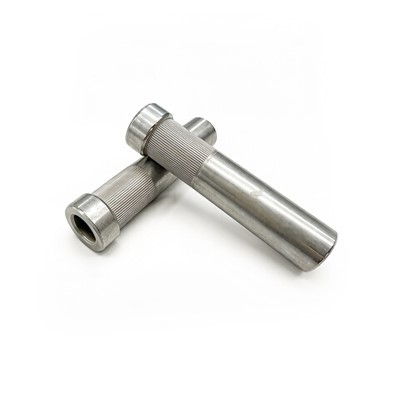
First, let’s keep it simple: workpiece hardness is just how resistant a material is to getting dented, scratched, or deformed. For turning, that’s measured on scales like Rockwell C (HRC) or Brinell (HB)—you’ve probably seen those numbers on material spec sheets. Now, how does that mess with your turning setup? Let’s start with tool life, because that’s the biggest headache everyone deals with. If you’re turning a soft material, say mild steel around 15 HRC, your cutting tool can glide through it without much fuss. The chips break clean, the heat spreads out evenly, and your tool might last hours, even a full shift. But crank that hardness up to 35 HRC or higher—like with hardened steel, some stainless steels, or even certain alloys—and that’s when the party stops. Harder workpieces make the tool edge scrape instead of cut, right? That generates way more friction, which cranks up the heat. For most tools—whether carbide, high-speed steel (HSS), or even cermet—that extra heat and friction eat away at the cutting edge fast. Last week, a customer came to me because their team was turning a 42 HRC part with standard carbide tools; they were changing tools every 10 pieces, scrapping 15% of parts from poor surface finish. We adjusted their setup for the hardness and swapped to a tougher carbide grade, and now they’re getting 60 parts per tool, zero scrap. That’s a real example, not some lab test fluff.
Next up: surface finish and part accuracy. If you’re making parts that fit together—like a shaft for a pump or a gear hub—your surface finish can’t be sloppy, and the dimensions have to be dead on. Harder materials don’t play nice here. Let’s say you’re turning a soft aluminum part; the tool cuts smoothly, leaving a nice, even surface. But when you crank up hardness, the cutting force gets way higher. That extra force can cause tool deflection—like the tool bending just a tiny bit as it spins, which makes the part’s dimension off. Also, those hard material grains are like little pebbles; as the tool digs in, it can pull out chunks instead of cutting clean, leaving rough spots or even micro-cracks. I had another client last month: they were turning a 38 HRC alloy for a hydraulic cylinder rod, and their surface Ra was coming in at 3.2 micrometers, which was too rough for the seal they needed. We bumped their cutting speed down a little (sounds counterintuitive, but for hard materials, slower speed reduces that friction heat) and used a sharp grinding insert edge, and their Ra dropped to 1.0—perfect for seals, no leaks, no rework. That’s a concrete win, not theory.
Wait, let’s not forget about power consumption and machine load. If you’re running a small lathe, that hard workpiece can put way more stress on the machine’s motor, gears, and bearings. Soft materials need maybe 1-2 HP per inch of tool width, but hard materials can jump to 4-5 HP. If your machine isn’t rated for that, you’re not just wearing out tools—you’re damaging the lathe itself, which is way more expensive to fix. A while back, a customer tried to turn a 40 HRC tool steel on a old 10 HP lathe they had in the back. Halfway through the job, the lathe’s spindle seized up, costing them $2,000 in repairs and a week of downtime. We told them they needed a 20 HP machine for that hardness, or we could pre-turn the part to a softer state first, then harden it after (wait, that’s another point: sometimes you can work around hardness, but it’s not always an option). That’s a real shop story, not something from a textbook.
Now, what about common myths here? I hear all the time: “Harder materials always mean worse results.” Nah, that’s not true. Modern tooling tech has come a long way. If you’re turning up to 55 HRC, you don’t even have to pre-grind the part—you can use hard turning, which saves time and money. But you have to match the tool grade to the hardness. For example, cubic boron nitride (CBN) tools are made for hard materials—they’re way harder than carbide, so they can handle that friction. We sell a lot of CBN inserts for parts around 45-55 HRC; those tools can last 10x longer than standard carbide in that range. Another myth: “Faster speed = better finish.” For hard materials, slower speed is better because it reduces heat. High speed works great for soft stuff, but when it’s hard, that heat builds up too fast, and the tool edge breaks down. I’ve seen guys crank their lathe to max speed for a hard part, and they end up with a tool that’s gone in 5 pieces instead of 50.
Also, chip formation is a big one. When you turn a soft material, chips are long, curly, and easy to evacuate—but that’s not a problem. Hard materials make short, broken chips, which can be good or bad. If they’re too small, they get stuck in the tool’s chip groove, which can cause the tool to chip or the part to get scratched. For the 42 HRC part I mentioned earlier, the customer’s chips were tiny and stuck, so we adjusted their feed rate a little to make longer, manageable chips, which eliminated that issue. That’s a small tweak, but it made a huge difference in their scrap rate.
Wait, let’s tie this back to why it matters for a supplier like me. Every customer’s job is different—some are turning soft aluminum for consumer goods, some are turning hard tool steel for aerospace parts. We can’t just give them a one-size-fits-all setup. That’s why we dig into the workpiece hardness first: measure the Rockwell number, check the material type, and then pick the right tool, speed, feed rate, and even machine type. If a customer comes to us with a hard part and they’re having trouble, we don’t just say “tough luck”—we work with them to adjust their process. Last quarter, we had a customer in the automotive industry turning a 39 HRC crankshaft pin; they were having issues with tool wear and surface finish. We swapped their standard carbide inserts to a coated carbide grade designed for medium-hard materials, slowed their speed from 800 SFPM to 500 SFPM, and increased feed rate just a hair. The result? Tool life doubled, surface finish improved by 40%, and their downtime dropped by 25%. That’s the kind of value we bring—we don’t just sell tools, we solve problems based on material hardness.
Now, let’s talk about when hardness can actually be an advantage? Wait, the question is about impact, so let’s be balanced. If you’re making a part that needs to be wear-resistant—like a bearing race or a cutting edge—hardness is exactly what you want. Turning a hardened part means you get a part that can stand up to use, and you might even skip a grinding step, which saves time. But you have to plan for the tool wear and machine load ahead of time. If you try to treat a hard part like a soft one, you’re going to pay for it.
Let’s wrap this up. The takeaway is: workpiece hardness isn’t just a random number on a spec sheet—it’s a critical factor that affects every part of your turning process, from tool life and scrap rate to machine health and part quality. As a turning supplier, we see this play out every single day, in jobs big and small. Skipping the step of checking hardness, or not adjusting your setup for it, is a quick path to headaches and extra costs.

If you’re dealing with turning jobs and you’re not sure how material hardness is messing with your process—whether it’s constant tool changes, bad surface finish, or downtime—hit us up to chat. We’re not here to push a one-size-fits-all solution; we’ll break down your job, check the material specs, and work with you to get your process running smooth. Don’t let hardness be the hidden problem in your turning work—let’s fix it together.
Washers References:
- Childs, T.H.C., Maekawa, K., Obikawa, T., & Yamane, Y. (2000). Metal Cutting: Theory and Applications. Butterworth-Heinemann.
- Shaw, M.C. (2005). Metal Cutting Principles (2nd ed.). Oxford University Press.
- Kalpakjian, S., & Schmid, S.R. (2014). Manufacturing Processes for Engineering Materials (6th ed.). Pearson.
Shanghai Megood Metal Products Co., Ltd.
As one of the most experienced turning manufacturers and suppliers in China, we have world-leading production equipment and strong manufacturing capabilities. Please rest assured to wholesale bulk turning made in China here and get quotation from our factory. Customized orders are welcome.
Address: Building 8, No. 1500 Huiren Road, Waigang Town, Jiading District, Shanghai
E-mail: liujingshco@163.com
WebSite: https://www.mgx-hardware.com/
