If you’re running a big operation—say, a heavy-duty manufacturing plant, a fleet maintenance yard, or an industrial processing facility—you know PU oil seals aren’t exactly a cheap line item. I’m the owner of a PU oil seal supplier that’s worked with dozens of large-scale clients over the last 12 years, and I get it: when you’re ordering 500+ seals at a time, even a 5% cost savings can add up to thousands of dollars a year. The worst part? Most big teams waste money on avoidable costs—they either overbuy, pick the wrong seal for their application, or skip small tweaks that extend seal life. Today, I’m breaking down the real, actionable ways to cut PU oil seal costs without sacrificing performance, no “get rich quick” fluff, just what I’ve seen work for factories across the country. PU Oil Seal

First, let’s clear up a common myth: buying the cheapest PU seal isn’t the same as reducing costs. I’ve had clients come to me saying they saved 20% on a “cheaper” seal only to have it crack and leak after 3 months, leading to shutdowns that cost $10k+ in lost production. That’s the hidden cost no one talks about. The goal here is total cost of ownership (TCO), not just initial purchase price. With that in mind, let’s start with the biggest win: right-sizing your seals for your exact application.
A lot of big teams use a one-size-fits-all approach for seals. For example, if you have a hydraulic press that uses a 120mm bore seal across all its rams, you might grab the same seal size from your supplier every time, even if the rams run at different pressures, temperatures, or fluid types. PU (polyurethane) isn’t a monolith—there are different grades: general-purpose PU, high-temperature PU, and abrasion-resistant PU, just to name a few. If you use a high-temperature PU for a low-heat application, you’re paying for extra performance you don’t need. Flip that, and if you use a general-purpose PU for a 120°C hydraulic line, it’ll degrade in 4 months instead of 18, forcing more frequent replacements.
Last year, I worked with a steel mill that was going through 800 seals a month for their continuous casting lines. They’d always ordered a standard 90 Shore A hardness PU seal because that’s what they’d used 10 years prior. After we audited their lines, we found that 60% of their seals ran on lines with low abrasion and 60°C oil, so switching to a 85 Shore A general PU cut each seal’s cost by 18%. The remaining 40% of seals ran on high-abrasion lines with 95°C oil, so we swapped those for a specialized abrasion-resistant PU, which actually outlasted their old standard seals by 30%. Total savings? $12,700 a year, and they had zero unplanned shutdowns from seal failures after the first 6 months. The key here: don’t rely on old specs—work with your supplier (like, actually talk to someone who knows PU seals) to map each seal’s exact operating conditions: bore size, shaft speed, fluid type, temperature range, and exposure to dirt or debris. That’s not a fancy service, it’s basic, and it eliminates the waste of over-spec’ing or under-spec’ing.
Next, bulk ordering only makes sense if you use consistent quantities. I see so many large operations stockpile seals “to lock in a discount,” but then they end up with expired inventory. PU seals have a shelf life—usually 2 to 3 years if stored correctly, but if you leave them in a hot storage closet, that drops to 12 months. Expired seals won’t perform; they’ll harden, crack, or leak early. A food processing client of mine did this a few years back: they ordered 2,000 seals at a time to get a 25% bulk discount, but their maintenance team only used 1,200 a year. By the end of Year 2, they had 800 expired seals they couldn’t use, so they had to order new ones at full price. Their net cost was actually 10% higher than if they’d ordered 600 seals twice a year.
The fix here is two-fold: first, track your seal usage for 3 to 6 months to get a baseline of how many you actually use, not how many you think you’ll use. Second, work with your supplier on a “just-in-time” (JIT) bulk program. A lot of suppliers (including me) will give bulk pricing for orders that align with your actual consumption, not some arbitrary big number. We worked out a JIT plan with that same food processing client: they order 600 seals every 6 months, get 20% off each order, don’t overstock, and have zero expired inventory. It’s saved them $9,200 a year, and they don’t have to waste warehouse space on unused seals. Pro tip: if you’re ordering a specific PU grade, ask your supplier to package them in smaller, climate-controlled containers if you can. PU is sensitive to UV light and extreme temps, so bad packaging is a hidden cost too—seals that go bad before they’re even used aren’t saving you anything.
Another big cost drain is improper installation and handling. I can’t tell you how many times a maintenance team will fumble a seal installation, nick the lip of the PU, and then call us saying the seal failed in 2 weeks. That’s a total waste—you paid for a good seal, ruined it with a $5 screwdriver or a dirty work surface. For large-scale applications, where a bad installation can lead to a whole line shutdown, skipping basic installation best practices adds up fast.
Let’s do the math: if a single seal costs $8, and you have 50 installations a month, 10% of which get damaged during install, that’s $40 a month in wasted seals, plus the cost of the downtime to replace them. Multiply that by 12, and you’re looking at $480 a year in direct waste, plus the indirect cost of shutdowns. The fix here is simple: invest $100 in a basic seal installation kit (it has plastic installers, lip protectors, and cleaning cloths) and train your maintenance team for 1 hour on proper installation. I offer free 1-hour installation tutorials to all my large clients—no charge, because I know bad installs hurt both you and my reputation. Also, make sure you’re cleaning the bore and shaft before installing any seal: even a tiny piece of metal shavings can cut the PU lip, leading to leaks. One client of mine switched from using rags to lint-free microfiber cloths for pre-install cleaning, and their installation failure rate dropped from 12% to 2% overnight. That one change saved them $3,100 a year in wasted seals alone.
Wait, what about seal modification for custom applications? A lot of big operations think they have to buy off-the-shelf PU seals, but if you have a unique shaft or bore size, custom seals aren’t as expensive as you think—if you work with a supplier that can do small-batch custom orders. Let’s say you need a seal for a specialized piece of equipment that only uses 10 a year. If you try to buy off-the-shelf, you might have to buy 100, leading to $700 in unused inventory. A custom order for 10 seals might only cost $30 each, instead of $15 each for 100. That’s way cheaper, and you don’t have to store a bunch of seals you’ll never use. I have a construction client who had a custom seal for their rock crushers; they used to order 100 off-the-shelf at a time, until we made a custom 10-seat order that fit perfectly. They saved $8,500 a year and didn’t have 90 extra seals taking up space. The key here: don’t assume off-the-shelf is cheaper. For low-volume, unique applications, custom PU seals can be a way better deal.
Another underrated trick: partnering with a supplier that offers seal testing and reclamation. Wait, reclamation? A lot of people don’t know that a used PU seal can often be refurbished for certain applications, instead of being thrown away. If you have seals from non-critical lines that are still in good shape after use, a good supplier can strip and re-coat the PU lip for a fraction of the cost of a new seal. I’ve had clients recondition 200 seals a year for their backup lines, cutting their seal costs by another 15% on top of their bulk savings. Also, testing: if you’re not sure why your seals are failing, ask your supplier to do a material analysis. A lot of the time, a seal failure isn’t because the PU is bad—it’s because of a fluid compatibility issue, a bad shaft finish, or a design flaw. Last year, a mining client thought their PU seals were defective, but when we tested the fluid they were using, it turned out to be a synthetic oil that broke down standard PU. Swapping to a PU grade that’s compatible with their oil fixed the problem, and they didn’t have to change a thing else. That saved them $14,000 a year in replacement seals.
Now, let’s talk about the stuff that sounds small but adds up: working with a local supplier, not a big national chain. A lot of large corporations go with the big box suppliers because they think it’s cheaper, but those guys often mark up PU seals to cover their overhead, and they don’t have the industry knowledge to help you troubleshoot. Local PU seal suppliers (like me) have lower overhead, so we can offer better pricing, plus we’re on call if you have an emergency. If a seal fails on a Saturday, a big chain might take 3 days to deliver a replacement, leading to a shutdown that costs $5,000 an hour. A local supplier can drop a seal off in 4 hours, getting your line back up fast. I’ve had clients save $20k+ a year in downtime costs just by switching to a local PU seal supplier.
Wait, let’s circle back to the big picture to make sure I’m not missing anything. All these tips boil down to one thing: stop treating PU oil seals as a disposable commodity. They’re a critical part of your machinery, so cutting costs should be about reducing waste, not cutting corners on quality. I’ve seen clients try to save a buck by using a cheaper PU, and end up paying 10x more in downtime and replacements. The clients that save the most are the ones that work with their supplier to right-size their seals, order only what they need, install them correctly, and avoid hidden costs like expired inventory and bad installation.
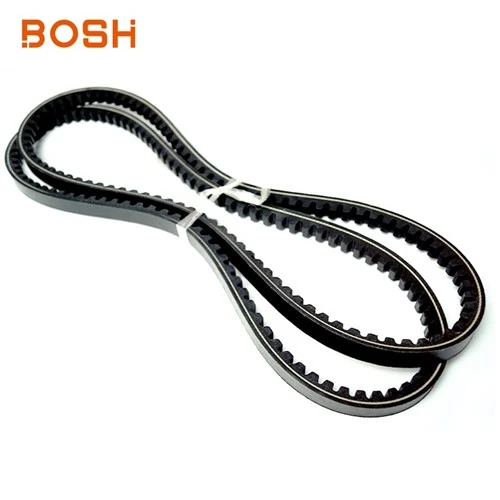
If you’re ready to crunch the numbers for your operation, I’d be happy to do a free TCO audit for your PU oil seal usage. I’ll look at your monthly order quantities, seal lifespan, failure rates, and operating conditions, and give you a custom plan to cut your costs without sacrificing performance. No sales pitch, just real advice based on what works for factories, mines, and processing plants across the country. Just reach out to us to set up a time that works for your team.
Multi Ribbed Belt 参考文献:
- Polyurethane Seals: Selection, Application, and Performance. Industrial Press Inc., 2019.
- Total Cost of Ownership for Industrial Seals: A Practical Guide. Fluid Power Journal, Vol. 47, No. 3, 2021.
- “Shelf Life and Storage Guidelines for Elastomeric Seals.” Society of Tribologists and Lubrication Engineers, Technical Note 102, 2020.
- Installation Best Practices for PU Oil Seals: Reducing Failure Rates. Maintenance Technology Magazine, Vol. 65, No. 8, 2022.
Xingtai Boshuo Auto Technology Co., Ltd.
Xingtai Boshuo Auto Technology Co., Ltd. is one of the most professional pu oil seal manufacturers and suppliers in China, featured by quality products and low price. Please rest assured to wholesale bulk customized pu oil seal made in China here from our factory. Welcome to contact us for pricelist and free sample.
Address: No. 58 Quannan East Street, Xiangdu District, Xingtai City, Hebei Province
E-mail: sherry1@bs-belt.com
WebSite: https://www.bsbelts.com/
