Hey there! I’m a supplier of structural steel components, and I’ve seen my fair share of issues with these parts over the years. In this blog, I’m gonna chat about the common defects in structural steel components and how we can deal with them. Structural Steel Components

Common Defects in Structural Steel Components
1. Cracks
Cracks are one of the most serious defects in structural steel. They can occur due to a variety of reasons. For example, during the manufacturing process, if the steel is cooled too quickly, it can cause internal stresses that lead to cracking. Also, excessive loading on the steel component in its service life can initiate cracks. Fatigue cracking is another common type, which happens when the steel is subjected to repeated cyclic loading.
I remember one time, we had a batch of steel beams that were supposed to be used in a construction project. When we were doing the quality inspection, we found some small cracks on the surface of a few beams. These cracks were likely caused by improper heat treatment during the manufacturing process. If these cracks were left undetected and the beams were installed, it could have led to serious safety issues down the line.
2. Corrosion
Corrosion is a big problem for structural steel. Steel is made mostly of iron, and when it comes into contact with oxygen and moisture, it rusts. This can happen during storage, transportation, or in the actual service environment. In coastal areas, where the air is salty, the corrosion rate can be even faster.
We once supplied some steel columns for a building near the ocean. After a few months, the client reported that the columns were showing signs of corrosion. The salty air and high humidity in that area had accelerated the rusting process. Corrosion not only weakens the steel but also affects its appearance. If left untreated, it can lead to a significant reduction in the load – bearing capacity of the steel component.
3. Weld Defects
Welding is a common way to join structural steel components. However, welds can have defects. Porosity is one such defect, which is caused by the presence of gas pockets in the weld. This can happen if the welding process is not carried out in a proper environment or if the welding materials are contaminated. Another common weld defect is lack of fusion, where the weld metal does not properly bond with the base metal.
I’ve seen cases where weld defects led to the failure of a steel structure. For instance, in a bridge project, a weld with lack of fusion caused a joint to fail under normal loading conditions. This not only required costly repairs but also caused delays in the project.
4. Imperfections in Shape and Dimension
Sometimes, the steel components may not have the correct shape or dimensions. This can be due to errors in the manufacturing process, such as inaccurate cutting or bending. If a steel beam is supposed to have a certain length and width but is off by a few millimeters, it can cause problems during installation.
We had a situation where we supplied some steel frames for a factory building. When the construction team tried to install them, they found that the frames didn’t fit properly because of dimensional errors. This led to a lot of re – work and wasted time.
How to Deal with These Defects
1. Cracks
If we detect cracks in the steel components, the first step is to assess the severity of the crack. For small surface cracks, we can use a process called grinding to remove the cracked area and then apply a suitable filler material. However, for deeper cracks, it may be necessary to replace the entire component.
Before we supply any steel parts, we use non – destructive testing methods like ultrasonic testing to detect internal cracks. This helps us catch the problem early and take appropriate action.
2. Corrosion
To prevent corrosion, we can apply protective coatings to the steel components. There are different types of coatings available, such as paint, galvanizing, and epoxy coatings. Galvanizing is a popular method where a layer of zinc is applied to the steel. The zinc acts as a sacrificial anode, protecting the steel from rusting.
For components that are already corroded, we first need to remove the rust. This can be done by sandblasting or using chemical rust removers. After the rust is removed, we can then apply a new protective coating.
3. Weld Defects
To avoid weld defects, we make sure that our welders are well – trained and follow proper welding procedures. We also use high – quality welding materials and equipment. If we find a weld defect, we can re – weld the area after removing the defective part. In some cases, if the defect is too severe, we may need to cut out the entire welded joint and re – weld it.
We conduct regular quality checks on our welds using methods like visual inspection, X – ray testing, and magnetic particle testing. This helps us ensure that the welds meet the required standards.
4. Imperfections in Shape and Dimension
To prevent dimensional errors, we use precision manufacturing equipment and follow strict quality control procedures. If we find that a component has an incorrect shape or dimension, we can try to correct it through machining or bending operations. However, if the error is too large, we may have to scrap the component and manufacture a new one.
Conclusion
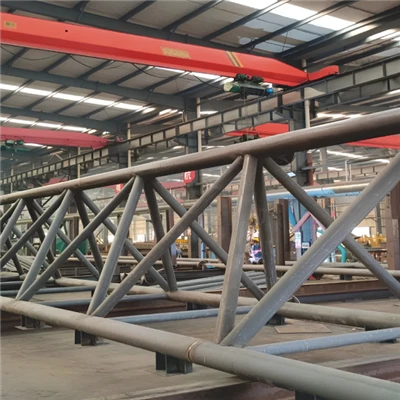
As a supplier of structural steel components, it’s our responsibility to ensure that the parts we supply are of high quality. By being aware of the common defects and knowing how to deal with them, we can provide our customers with reliable and safe steel components.
Bracing Systems If you’re in the market for structural steel components, don’t hesitate to reach out to us. We’ve got the experience and expertise to meet your needs. Whether it’s a small project or a large – scale construction, we can provide you with top – notch steel parts. Let’s have a chat and see how we can work together to make your project a success.
References
- ASCE Structural Steel Building Code
- AWS Welding Handbook
- ASTM Standards for Structural Steel
GNEE Steel Structure (Tianjin) Co., Ltd.
As one of the most professional structural steel components manufacturers and suppliers in China, we have world-leading production equipment and strong manufacturing capabilities. Please rest assured to buy customized structural steel components at competitive price from our factory. For quotation, contact us now.
Address: No.4-1114, Beichen Building, Beicang Town, Beichen District, Tianjin, China
E-mail: info@gescosteel.com
WebSite: https://www.gneesteelstructure.com/
