Hey everyone, if you’ve ever worked with stretch fabric—whether you’re a fashion designer looking to craft the perfect yoga leggings, a product developer making swimwear that moves with the body, or even someone who just buys fabric for DIY projects at home—you’ve probably stared at a swatch book and thought: “Wait, how many color choices are actually here?” As a stretch fabric supplier who’s spent the last 8 years curating stock and custom orders, I get it. Stretch isn’t just about the 2-way or 4-way stretch, spandex blend, or stretch recovery—color is huge, too. It’s not just slapping any dye on there; there’s a science that goes into what colors are possible, especially for stretch fabrics that get stretched, pulled, washed, and worn a lot. Today, I’m breaking down what colors you can actually get, why some are easier (or harder) than others, and how to pick the right ones for your project. Stretch Fabric

First off, let’s start with the basics: stretch fabric is almost always a blend, right? It’s usually a base fiber—polyester, nylon, cotton, or even rayon—mixed with 2-15% spandex (lycra, if you’re old school like me). That mix is key because different fibers take dye totally differently, and spandex has its own quirks. For example, nylon takes acid dyes really well, which is why you see so many bright, saturated colors in activewear made with nylon-spandex. Polyester, on the other hand, needs disperse dyes, which are a bit trickier, and they don’t bind to spandex as easily. Cotton-spandex blends? That’s a whole other story—cotton reacts to reactive dyes, so you get colors that are soft, not super neon, and they fade a bit faster than nylon’s bright hues. I see a lot of designers get confused here: if you want a super vibrant red for your running shorts, a 80/20 nylon-spandex blend is way better than a cotton one. The base fiber dictates the color palette first, that’s step one.
Now, let’s talk about the color types. First, we’ve got solid colors—those are the bread and butter for most of our customers. You can get solid stretch fabric in basically any shade from Pantone’s solid palette, but with a catch: some shades just don’t hold up as well on stretch. For example, true neon colors are possible, but they’re super pigment-heavy, so they can make the fabric a little stiffer if we’re not careful. We recently had a customer who wanted neon yellow for her soccer jerseys, and we had to adjust the spandex blend slightly to keep the stretch recovery intact—too much pigment can clog the spandex’s elastic fibers, so it won’t bounce back as well after a stretch. That’s a common mistake people make: they forget that color has to work with the fabric’s stretch properties, not just look good on a swatch. We also do pastels, which are super popular for loungewear right now. Pastels use less dye, so they’re gentler on the fabric’s elasticity, too—you don’t have to worry about them fading as fast as dark shades in the wash, which is a win for loungewear that gets washed every week.
Next up, heathered and melange colors. These are the ones where you mix two or more colored fibers before weaving or knitting, so you get that soft, slightly textured, not-too-flat look. Heathered gray is classic for hoodie lining or casual leggings, but you can get heathered blues, greens, even pinks now. For stretch fabric, heathered colors work best if the base blend has consistent fiber sizes—if the spandex is too clumpy, the color mix will look uneven. We’ve had a lot of requests for heathered stretch fabric for sustainable activewear lately, too—since we can use recycled polyester for the base, and mix it with a tiny bit of white or gray spandex to get that heather without extra dye. It’s a more eco-friendly option, which I love because more of our customers are prioritizing sustainability these days. Then there are printed colors, which is where it gets really fun—but also where the science kicks in. Prints can be anything from small geometric patterns to large floral designs, tie-dye, even custom graphics. But again, stretch fabric’s elasticity means you can’t just print anything. Direct-to-garment (DTG) printing works for stiffer fabrics, but on stretch, it can crack when the fabric is stretched. So we use screen printing with a stretchable ink, or digital transfer printing, which is more flexible. We also have to make sure the ink doesn’t seep into the spandex fibers too much—spandex is super absorbent, so if the ink binds too tightly, it will make the fabric lose stretch over time. Last year, a swimwear brand came to us with a custom tie-dye print for their bikinis, and we had to test three different ink types to find one that stayed bright even after 50 washes and being stretched in water. That’s the stuff you don’t see as a customer, but it’s why our fabric holds up.
Now, let’s get into the “can you even get that color?” questions I get all the time. First, what about black? Everyone wants black stretch fabric, right? And yeah, it’s super common, but dark colors like black or deep navy have more dye concentration, so they can sometimes cause fading if not properly cured. We use a high-temperature curing process for our black stretch fabric, which locks the dye into the base fibers and spandex so it doesn’t bleed into other clothes in the wash. I’ve had customers complain about “grayed out” black leggings after a few washes— that’s usually because the dye wasn’t cured right, or they used too much bleach (pro tip: never use bleach on spandex blends, it breaks down the elastic). Then, what about white? White stretch fabric is trickier than it looks. If you use a base fiber that’s not bright white, the dye will come out off-white. But also, white is prone to yellowing over time, especially if it’s cotton-spandex. We use a optical brightener that’s safe for spandex blends, which keeps the white bright longer, but it does add a tiny bit to the cost. Another popular one is “nude” or skin-tone colors for shapewear and undergarments. The thing about nude stretch is that skin tones vary so much, so we carry a range—light beige, medium tan, deep brown, even dark nude for Black and Brown bodies. A lot of suppliers only have one or two nude shades, but we worked with a few undergarment brands last year to expand our nude line because so many customers said they couldn’t find a nude that matched diverse skin tones. That’s something I’m proud of—color isn’t one-size-fits-all, especially when it’s for something like shapewear that’s meant to look seamless.
Wait, what about specialty colors? Metallics, for example—metallic stretch fabric is huge for dancewear or festival clothes. The metallic coating is a thin layer on the fiber, so we have to make sure it’s flexible enough to not crack when stretched. Gold and silver metallic are the most common, but we also have copper and rose gold for customers who want something a bit different. Then there’s UV-reactive color, which changes when exposed to sunlight—super popular for activewear right now. UV-reactive dye is bonded to the polyester base, so it doesn’t affect the spandex’s stretch, which is why it works so well for running clothes that get worn outside. We also do color-shifting fabrics, which change color when stretched or when the temperature changes—cool for novelty items, but we have to test the color shift to make sure it’s consistent every time.
Now, let’s talk about what to consider when choosing colors for your stretch fabric project. First, end use. If it’s activewear that’s going to be washed a lot, stick to dark solid colors or heathered—pastels and bright prints can fade faster. If it’s shapewear, go for nude shades that match your target market’s skin tones, not just what’s easy to dye. If it’s swimwear, make sure the color is chlorine-resistant—acid dyes on nylon-spandex are chlorine-resistant, but disperse dyes on polyester might fade if you’re swimming in a chlorinated pool a lot. Another thing: color consistency. When you’re ordering bulk, you don’t want one roll to be a slightly different shade than the next. We use a spectrophotometer to test every batch, so every roll of our stretch fabric matches the Pantone color code you ordered. That’s something a lot of smaller suppliers skip, but it’s a big deal for designers who need their collection to have uniform colors.
I get a lot of “can you make a custom color?” questions, too. Yep, we do custom dye jobs, but there’s a minimum order quantity (MOQ) usually—usually around 50 yards, depending on the blend. For custom colors, we’ll send a lab dip first, so you can confirm the shade before we dye the whole batch. I always recommend getting a lab dip, even if it’s just a small test, because sometimes the color on a computer monitor is different from what actually comes out on the fabric. Last month, a small boutique came to us with a custom sage green for their linen-spandex blend, and the lab dip was a little too yellow, so we adjusted the dye concentration before dyeing 60 yards for their spring line. That saved them from having a whole batch of fabric that didn’t match what they wanted.
Wait, what about common myths? I hear so many people say “stretch fabric only comes in basic colors” and that’s just not true anymore. Modern dyeing tech means we can get almost any shade, as long as we account for the fiber blend and the stretch properties. The old days of only white, black, and navy are gone—now we have everything from muted earth tones to bright neons to custom color-shifting prints. The only time you might have a limitation is if you’re using a really niche blend, like a hemp-spandex blend—hemp is tricky to dye, so colors on hemp-stretch are a bit more muted, but still way more than just basic shades.
Another myth: “printing on stretch fabric is cheap.” It is, but not if you want a high-quality print that doesn’t crack. Cheap screen printing ink will crack after a few stretches, so we use stretch-cured ink that has a bit of spandex in it, so it moves with the fabric. That does cost a little more, but it’s worth it for clothes that last. I’ve had customers bring back leggings they bought elsewhere that had cracked prints, and they come to us asking for replacements because our prints hold up.
So, to wrap this up: the colors available for stretch fabric aren’t random. They’re determined by the fiber blend, the dye type, the print method, and the end use of the fabric. Whether you need solid, heathered, printed, metallic, or custom shades, there’s a stretch fabric color out there that fits your needs, you just have to work with a supplier who knows how to balance color and stretch.
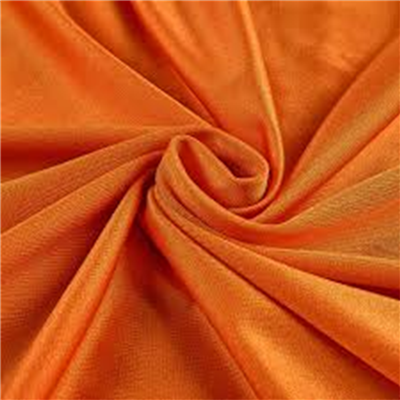
If you’re a designer, product developer, or small business owner looking for stretch fabric with the right colors and quality, we’re here to help. We work with everyone from small boutique brands to large activewear companies, and we can help you pick the best color and blend for your project, no matter how big or small. Reach out to us to chat through your needs, and we’ll send over swatches and lab dips to make sure you get exactly what you want.
French Terry References
- Textile Institute. (2021). Dyeing and Finishing of Elastic Fabrics. Textile Progress.
- Johnson, A. (2022). Color Consistency in Stretch Fabric Production. Journal of Textile and Apparel, Technology and Management.
- International Organization for Standardization. (2019). Test Methods for Color Fastness of Stretch Fabrics. ISO 105-X12:2019.
- Fashion Institute of Technology. (2020). Color Selection for Performance Apparel Fabrics. FIT Textile Design Research.
Shaoxing Xinlian Dyeing & Weaving Industrial Teade Co., Ltd.
We’re well-known as one of the leading stretch fabric manufacturers and suppliers in China. With a professional production team, we are able to meet the needs of the majority of our customers. Please rest assured to wholesale bulk customized stretch fabric from our factory.
Address: Building 3-2, Huangxian Village, Lanting Subdistrict, Keqiao District, Shaoxing City, Zhejiang Province, China
E-mail: inquiryxinlian@163.com
WebSite: https://www.xinliantextile.com/
